Colour My Stash Contest for Movember is ON!

You might be walking around town, at work and in malls and observing a number of men with silly little attempts at moustaches and wondering…are the 70’s coming back?  Nope its Movember!

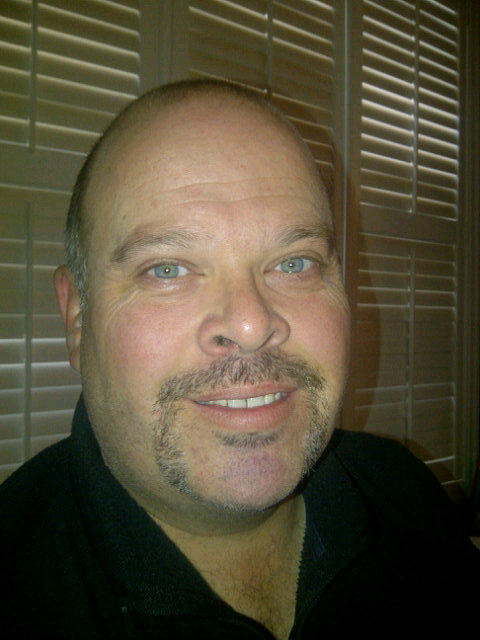
Myself as well as hundreds of thousands of men in Canada are taking part in this annual tradition of growing our stash to raise money and awareness for mens health issues.

There is a team assembled in Milton called the Milton MO’s who are committed to raise as much money as possible for this cause.  So far we have 8 members and Im very proud to say we are setting a pretty lofty goal.  We would like to be in the top 10o0 of teams in Canada and we need your help.

Ive been described as a guy who puts his money where his mouth is when its comes to taxes in Milton and this is no different.  As I did last year, I had a contest to help raise more money.  I donated my stash to be coloured for the last week of the month.  Up until November 23rd, the person or organization who gives the largest donation gets to pick the colour.  Last year there was a battle between the Blue Room Spa here in town (who of course wanted BLUE) and other residents and we ended up raising several hundred more dollars than if I didnt have this contest.

So please be generous.  Go to my Movember page http://ca.movember.com/mospace/3343581 and get in line to pick a colour.  Pass the link on to your friends or anyone else that might want to see yours truly walk about town with a coloured stash.

If you have already donated to Movember … THANK YOU SO MUCH!  IF not why not have some fun with it (at my expense) so lets have some fun and help change the face of men’s health.

GO MO!

Milton Remembrance Day Ceremonies

This weekend there are two ceremonies to celebrate Remembrance Day.

The first one is on Saturday morning at the Evergreen Cemetery on Ontario St (across from EC Drury) starting at 1045AM at the cenotaph.

The second one is Sunday morning in downtown Milton beginning at 130 pm and will include a parade of Scouts, Guides, Cadets and a whole host of others including our veterans.  The ceremony will begin at Milton Town Hall at the cenotaph for 2pm.

Afterwards please join us at the Legion Branch for some food, drinks and great conversation with our veterans.  Its a great opportunity to say thank you to those who fought in wars for our freedom and remember those who didnt make it back.

Canada is an amazing country because of these brave men and women and while she should remember and thank them every day, please take some time this weekend to attend either one of these events.

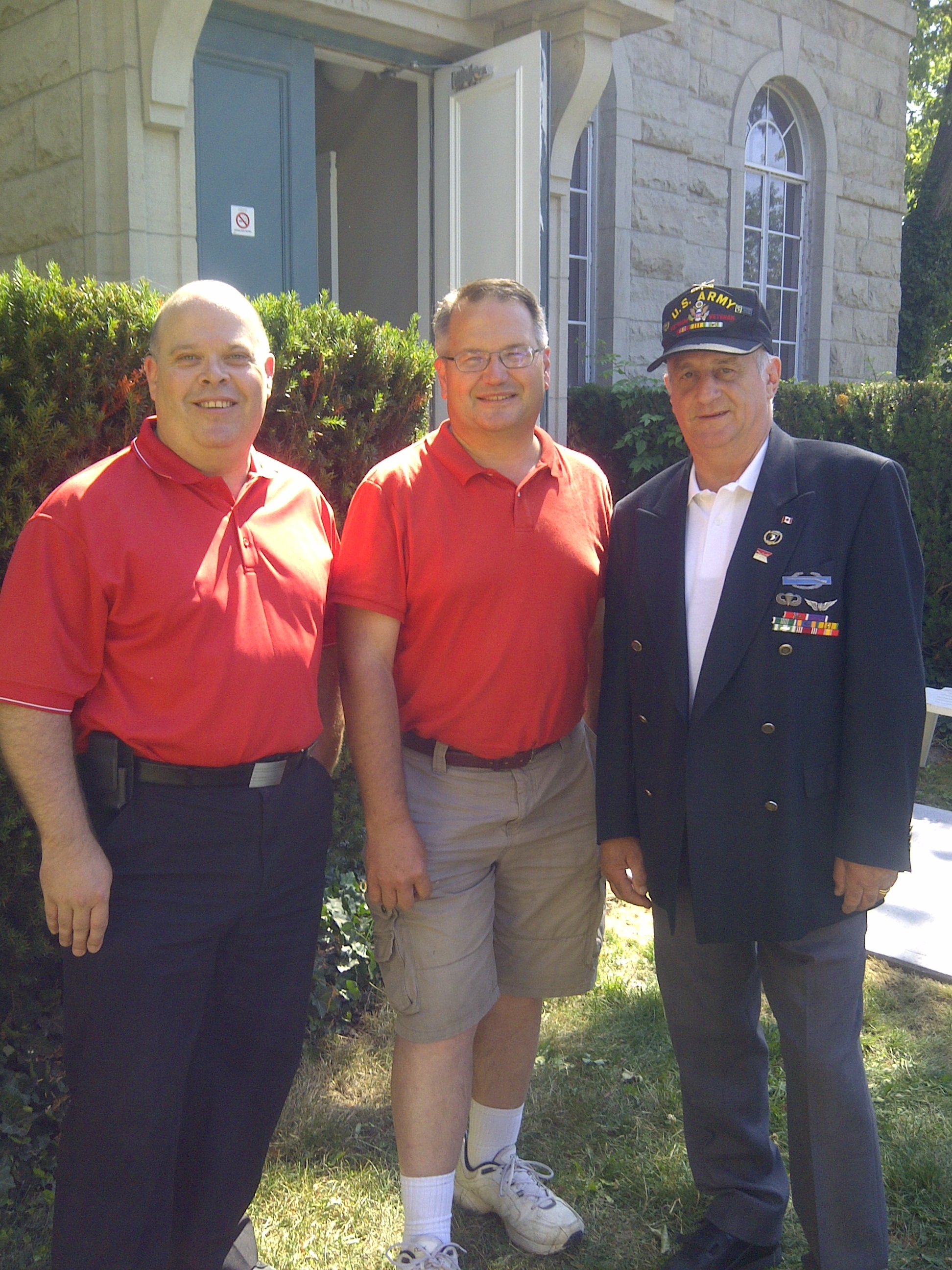
Pictured here on Canada Day Veterans Breakfast are yours truly, Regional Councillor Colin Best and fellow councillor and Vietnam veteran Rick Malboeuf.

Lest we forget.

Navigating Through The Fog – Part 3 of 4

Unlocking autism mystery with diet, programs

Part three of the four-part Metroland series, Navigating Through the Fog

ERIC RIEHL / OAKVILLE…

Somewhere in Ontario, a child would rather line up his toy cars than navigate them through an invisible maze.

Somewhere in Ontario, a mother looks at her child and instinctively wonders. A doctor tells a father they should wait and see.

Somewhere in Ontario, the diagnosis is confirmed — autism spectrum disorder (ASD).

Approximately one in every 100 children lives with autism, a neuro-developmental spectrum disorder that impedes a person’s ability to communicate and make friends.

Statistics indicate about one per cent of the population is on the spectrum. In Hamilton, some 5,000 individuals are caught in its fog.

The cause of the disorder remains unknown, but researchers believe the secret is in the genes. With no cure for autism, families affected by the disorder have turned to a variety of therapies that have proven successful in alleviating its wide-ranging symptoms. But accessing help is easier said than done.

This is the third of a four-part Metroland series, Navigating Through the Fog, that attempts to piece together the puzzle of autism.

• • •

Autism spectrum disorder is shrouded in mystery. Scientists have uncovered genetic links associated with the condition, which affects one in roughly 100 individuals living in the community; yet, no definite cause has been identified.

Despite the fog that envelops autism, interesting trends have emerged. These developments have allowed medical professionals to take different approaches when attempting to quell the disorder’s symptoms, which manifest themselves physiologically and developmentally.

For the parents, caregivers and those living with autism, headlines like “Baby communication gives clues to autism; High-tech tools created to study autism; Little evidence supports medical treatment options for adolescents with autism and Children with autism experience interrelated health issues” offer hope, advice and opinions. There are new studies and choices every day. Play-based and natural therapies, new apps or the latest tech-gadgets — the options are limitless.

A BIOLOGICAL ISSUE?

Dr. Sonya Doherty, a licensed and board certified naturopathic doctor who specializes in neuro-developmental disorders including autism, has zeroed in on her patients’ biochemistry and metabolic function to develop treatment modalities.

“What I believe, and what research is now supporting, is that autism is indeed a biological issue,” said Doherty, who operates her practice at Burlington’s The Natural Care Clinic.

Her biomedical treatments, which are partly covered by extended health benefits, have proven extremely successful among high- and low-functioning youth on the spectrum, targeting underlying impairments in physiology.

“If you can identify it, you can help them improve their quality of life and their developmental functioning,” she said.

There are many schools of thought on autism therapies and Doherty readily concedes her approach is far from mainstream, but effective nonetheless.

Just ask Ana Bejarano, a Milton mom of two boys, one with autism and another with pervasive developmental disorder (PDD), a condition that causes delays in development, socialization and communication. She turned to The Natural Care Clinic after numerous attempts to personally address her children’s behaviour and sensory issues as she and her husband did not have the financial means to fund intensive behavioural intervention (IBI), a series of therapies that can cost families tens of thousands of dollars annually.

Despite her efforts to implement a rigorous program in her home, she watched as her eldest son, Lucas, spiralled out of control.

“He was getting worse by the minute,” she said.

Lucas, who was three and a half at the time, was staring into space, barely slept and engaged in very rigid types of play. At times, he became aggressive, throwing objects in Bejarano’s path.

“I felt like I was a prisoner of autism,” she said. “It’s like I’m drowning and I can’t reach my son.”

EARLY WARNING SIGNS

On an interminable wait list for access to publicly-funded behavioural therapy, Bejarano was desperate for help for Lucas and his younger brother, Adrian, who was starting to exhibit some early warning signs.

In addition to his erratic behaviour, Lucas was suffering from bloody stools and chronic gastro-intestinal issues – symptoms reflecting a relatively new finding that links the brain’s development and problems with the gut.

“Up to 85 per cent of children with autism have digestive problems, severe constipation, severe diarrhea, even mucus and blood,” said Doherty.

Medical professionals often dismiss the digestive problems experienced by children on the spectrum as part and parcel of the disorder. “I hear this a lot and it’s just devastating,” said the naturopathic doctor.

Doherty’s non-conventional approach to using the body’s physiology as a roadmap to treating symptoms of autism is gaining popularity among families. But the process of replenishing the body of nutrients and vitamins, as well as eliminating items from one’s diet, is no child’s play.

For Bejarano’s boys, Doherty recommended a gluten- and dairy-free diet, a healthy dose of natural supplements and regular methyl B12 injections.

Altering Lucas’s diet “was the most difficult thing I have ever done,” said the Milton mom. The pre-schooler was a fussy eater, so much so that his diet consisted of only 11 items, including gallons of milk and spoonsful of ketchup.

Bejarano struggled with the nutritional regimen until she started looking at food differently. “I started to give him food like medicine,” she said.

Within a couple of months, Bejarano and her husband, Antonio Herrera, saw changes in Lucas’s behaviour and overall health. “He was actually coming alive,” she said.

The progress was also noticeable in Adrian, who also followed the same treatment plan for his PDD.

In Burlington, Lizanne Rowe’s son, Jack, experienced great success with biomedical treatment after he was diagnosed with autism at three and a half years. The family’s first plan of action was to consult with Dr. Doherty.

“We saw immediate results,” said Rowe.

Jack, too, was introduced to a gluten- and dairy-free diet, was provided with supplements and continues to receive methyl B12 injections, or as he calls it “his bum shot.”

Within a month, Jack had an explosion of language and a few months after that, began establishing eye contact with others. His tummy aches and other gastro-intestinal troubles subsided and his behaviour improved dramatically.

The changes in diet and nutrition were a family affair for the Burlington clan. Now, seven-year-old Jack shies away from foods loaded with gluten. “If we say, ‘That has gluten,’ he genuinely doesn’t want it because he knows that’s going to hurt his tummy,” said Rowe.

Methyl B12 injections, used to reactivate the biochemical pathways used to power up the brain, have also become part of Jack’s routine. And if he doesn’t receive his dose on time, his behaviour starts to shift. The youngster will even ask to have a “poke.” He feels himself slipping away back into the fog.

According to Doherty, much of the methodology used to treat autism has a direct impact on a child’s quality of life.

“For me, it’s almost a human rights issue,” she said. “If kids can’t sleep, they are sick all the time, they have terrible diarrhea, they have terrible digestion, then how can we expect them to learn and assimilate information so they can gain as many skills as possible?”

When Bejarano considered taking an alternative approach to treat her sons, her physician cautioned her.

“My doctor said, don’t be doing any voodoo stuff. That voodoo stuff has saved my life,” she stated.

There are other alternatives to intensive behavioural intervention, the traditional approach to autism therapy. One of those choices is the Oakville Success Centre.

The first of its kind in Canada, the new business provides psycho-educational therapy for people with dyslexia, attention deficit disorder, learning disabilities, autism and Asperger’s syndrome.

Cathy Dodge Smith, the centre’s director, uses the Davis Autism Approach, a non-invasive gentle method designed to allow autistic individuals to participate more fully in life. The approach, she said, draws autistic individuals out of the fog and into the real world.

Dodge Smith is stunned by the results of the program, which are relatively unknown in Canada. “It is like watching miracles unfold before my eyes,” she said. “During the first part of the program, I begin to see glimpses of the real person behind the autism mask.”

Working one-on-one with the autistic person, Dodge Smith said most intervention is behavioural, but this is not.

“We are teaching the individual how to be oriented,” she said. “At its core, (autism) is disorientation. They’re in their own little world.”

The director teaches them how to be fully present in the world – here and now. They come to understand how the world works and how they fit into it. Dubbed “individuation,” it allows the individual to build a perception of their senses to build a stronger awareness of self.

After undergoing a 30-hour week of therapy, the individual returns two weeks later for one-on-one treatments. Usually, Dodge Smith said, it’s as four-week program. She teaches sequencing, the importance of order, the ability to understand priorities.

“Whatever they want in their state, this allows them to begin thinking with these concepts,” said Dodge Smith, the former George Brown College Children’s Centre department head with more than 40 years of experience in special education and psychology. “There’s before and after, and the sequence didn’t make sense before (without the Davis approach).”

Modelling using white clay, Dodge Smith works with autistic people to explore the real world. It builds on a greater understanding of the world, which in turn strengthens identity and understanding.

“The white clay figures we make allow them to look at the world around them,” Dodge Smith explained, noting parents and caregivers are also included in the approach so they can learn to use it at home. “For them, the world is all about them. They’re not able to process that other people have needs.”

Through social integration, she is able to show an autistic person how the world works, how relationships work.

“That’s a huge block for them and they don’t get it… what do you need in relationship to another.”

Social integration is the third step in the Davis Autism Approach and its key concepts are the foundation of human relationships. These are worked on through clay modelling and can be built on, depending on an individual’s needs, she added.

Dodge Smith, 68, is a certified Davis facilitator, having trained under the program’s founder Ronald Davis. Davis has been working with autistic individuals for 30 years. The New Zealand man created the program and a small group of “Davis facilitators,” including Smith, are teaching it around the world.

She shared the positive outcomes of some of the Oakville Success Centre’s clients, including a 26-year-old female who was “a mess… on drugs, booze, and her parents thought they’d be supporting her forever.”

After completing the program, she has held a job, is off drugs and alcohol and experienced “a total turnaround,” Dodge Smith said. “She learned how to work with people, just by being here and being visible.”

The treatment is pricey at $3,600 per week and is not covered by any medical plans. Still, Dodge Smith stands firmly behind her work, in fact she came out of retirement to open the Oakville Success Centre.

“Sometimes it takes three to four weeks, but I’ve never heard of any individual that didn’t work out,” she said.

Oakville’s Peter and Elaine Rose placed their nine-year-old son Larry in the program and were pleased with his success.

“I honestly don’t think we would be achieving the success we have so far without Cathy and the Davis Autism Approach program,” Elaine said. “It played a huge part in helping my son to interact socially within his environment. He would not be in a regular class in school without it.”

Why Wear A Poppy?

Thanks to Oakville Councillor Jeff Knoll for posting this video on Facebook.  Remembrance Day is November 11th every year and we should do our best to remember every day.

Thanks for posting this Jeff.

MADD Canada Film In Milton

As I reported here awhile back, MADD Canada had filmed another documentary/informational movie in Milton.  This marks the 3rd time that they have filmed here in Halton.  With the holiday season approaching its once again time for the RIDE Program among other community outreach programs from MADD Canada and other organizations.

The best thing we can do is simply this…don’t drink and drive!  If you see someone who has had too much to drink, please stop them. What might be something small now, can lead to something a lot bigger.  Don’t take that chance.

Here is the article from the Milton Canadian Champion

MADD films video in Milton

MADD Canada visited Milton recently to film a anti-impaired driving awareness video for its annual school assembly program, which is shown to over a million students (Grades 7 to 12) across Canada.

The video is a 40-minute drama, followed by 15 minutes of hard-hitting scenes of real people talking about the loss of their loved ones.

This year’s production, with a working title of – ‘After Party’ – follows best friends Kelly and Natalie as they get ready to attend their school’s fall dance and eventually end up at an after-party with youths drinking and using drugs.

The film ends with an ironic twist, as viewers learn that it’s not only the irresponsible youths who suffer consequences of their actions.

The video’s crash and aftermath scenes were filmed on Louis St. Laurent Avenue, near Bronte Street, involving Halton Police, EMS and Milton Firefighters as extras, representing their respective agencies. The video was shot in both English and French, for distribution nationwide.

Navigating Through The Fog Part 2 – Autism Awareness

Here is the second part of a 4 part series printed in the Milton Canadian Champion about Autism awareness.  The topic is about something that every parent of children with ASD has to deal with every day!  The financial burden on these families is staggering.  There is treatment and counselling available, but it does come at a cost.

Advocates for Autism have been battling with the provincial government for years to get some kind of support for this much needed therapy and treatment, but have fallen on deaf ears.

Hopefully by these types of series, more people will be aware of this issue and more importantly contact their MPP’s and let them know that they HAVE to address this.  With more and more children being diagnosed with ASD every year, our provincial leaders need to hear their voices loud and clear…and help these wonderful kids navigate through the fog.

Heres part two.

ASD treatment a financial drain on families

Somewhere in Ontario, a child would rather line up his toy cars than navigate them through an invisible maze.

Somewhere in Ontario, a mother looks at her child and instinctively wonders. A doctor tells a father they should wait and see.

Somewhere in Ontario, the diagnosis is confirmed — autism spectrum disorder (ASD).

Approximately one in every 100 children lives with autism, a neuro-developmental spectrum disorder that impedes a person’s ability to communicate and make friends.

Statistics indicate about one per cent of the population is on the spectrum. In Hamilton, some 5,000 individuals are caught in its fog.

The cause of the disorder remains unknown, but researchers believe the secret is in the genes. With no cure for autism, families affected by the disorder have turned to a variety of therapies that have proven successful in alleviating its wide-ranging symptoms. But accessing help is easier said than done.

This is the second of a four-part Metroland series, Navigating Through the Fog, that attempts to piece together the puzzle of autism.

• • •

Max Carefoot, 6, sits attentively at a pint-sized table, his hands gently resting on his knees. On cue, he vocalizes a series of words, carefully chosen to perfect his enunciation skills.

Working on his bite and blow sounds, the bright-eyed boy repeats after communicative disorders assistant Gwen Blackburn.

My roof. My leaf. My calf. My knife. My cuff. My elf. My giraffe. My chief. Each letter of every word is audible. His speech is clear and his diction is precise.

“He’s doing amazing with words,” said Blackburn, who has been working with the Oakville boy for the past year. And considering Max was non-verbal until two years ago, his achievements are worthy of a gold star.

“I call him the hardest working kid in autism,” said his mom, Katrina Carefoot.

Max was diagnosed with autism spectrum disorder (ASD) when he was two and a half years old. When his family’s suspicions were confirmed, the Carefoots immediately sought early intervention.

Max attends blueballoon in Burlington, where he receives speech, music, behaviour and occupational therapies as well as enjoys social groups for four hours every day of the week — a schedule he has maintained for the past three years. The Fairview Street facility, which prides itself on its ability to offer a comprehensive approach to healthcare, provides access to a variety of therapies all under one roof.

“We integrate our programs,” explained Natalie Elms, blueballoon’s manager of business, development and community relations. “We are working together on the same plan.”

Those programs, however, come at a cost.

To cultivate the special person who is Dorian Poe, his parents have spent their entire life’s savings and then some. To put it in relative terms, Christine Poe and her husband, Brett, could have paid for their single-family dwelling in central Burlington a few times over.

Nine-year-old Dorian was diagnosed with ASD when he was in Grade 1. The Burlington boy is bright, funny, loving and super sensitive. He can, however, suffer meltdowns that see him scream, kick, hit and become destructive, showing absolutely no remorse.

With wait lists restricting access to early intervention, the Carefoots and the Poes opted to privately fund their sons’ therapies. While they receive some financial support from the government, the bulk of the costs associated with treatment has come out of the family’s pocket.

“We have gone into major debt because of this,” said Carefoot. “We are very blessed that we are middle class enough that the bank will give us enough rope to hang ourselves.”

When the family first purchased their Oakville home a decade ago, they carried a $215,000 mortgage. Today, that debt hovers around $300,000.

“You do what you have to do for your kid,” she stated.

It’s a sentiment that eerily resonates with Poe. She wouldn’t hesitate to spend every penny she has to ensure Dorian, a student at Burlington’s Missing Links, is in a safe, educational environment so he can grow up to meet his full potential.

Poe said their family was forced to sell their “dream home” in Millcroft to move to a more affordable one in central Burlington. Still, they carry a hefty mortgage and financial hardship is a day-to-day struggle. The puppet shows and small-scale fundraisers Poe holds don’t come close to supporting the true costs of Dorian’s therapies.

The investments into intensive interventions, however, have not been in vain.

Prior to undergoing therapy, Max never made eye contact, would run into walls and suffered meltdowns. The toddler would also have episodes where he’d become so upset not even his mother could soothe him.

“It’s heartbreaking as a parent,” said Carefoot. “You feel like a failure.”

As for Dorian, he can’t function in the public school system. When he attended Grade 1 at Ryerson Elementary School, Poe recalls being called to pick him up on numerous occasions when he was throwing things or having a tantrum.

He struggled with academics, behaviour and the ability to socialize appropriately.

“I’d be called in to pick him up because nobody could settle him,” she said. “I was always crying and blaming myself, wondering if it was something I did.”

Within months of working with the professionals at blueballoon, Max’s behaviour started to change. Transitioning from the facility’s foyer to a therapy room — a changeover that used to elicit tantrum-like behaviour — was beginning to go without a hitch.

Then, in August 2010, Max started to talk.

“When you inch along and you inch along, you can’t even see the inches,” said Carefoot of her son’s progress. “But when they all come together and you are able to see a huge jump like that… it’s remarkable.”

The milestone was an emotional moment for Carefoot and her husband, Scott. “I wanted to jump over the moon, I was so excited,” she recalled. Since then, the family celebrates the breakthrough annually, as if it were Max’s birthday.

At Woodview: Mental Health and Autism Services, a learning centre that operates 12 programs in the Halton area, where Dorian previously attended for two years, the Burlington child flourished under the one-on-one care.

The individualized program came at a whopping $45,000 annual cost.

Dorian, said his proud mom, is now an A student — an achievement he’s maintained throughout his education at Woodview and his current school, Missing Links, which provides academic and group Applied Behaviour Analysis and Intensive Behavioural Intervention (ABA/IBI) therapies for children with autism. It costs $24,500 per year.

Determining the appropriate day-to-day curriculum for children on the spectrum is a specialized process that considers every aspect of a child’s individual needs.

In assessing children with autism, blueballoon maps out a child’s strengths in numerous areas, including gross and fine motor skills, expressive language and social skills. Where gaps are identified, programs are designed to assist the child.

Children with autism have the capacity to learn the same things as a typically developing child, said Elms. However, in some areas, they need support.

The earlier those supports are put in place, the better. Early, intense intervention is a key element to success.

“If you get them immediate early intervention, that could change the whole course of their lifetime,” said Trish Simons, a mother of three autistic boys and president of the Hamilton-Wentworth chapter of Autism Ontario.

It’s the early intervention that allowed Max to burst out of his bubble, where he now leads a happy and fulfilled life. Had the family waited an additional two years to access government-funded therapy through Halton Region’s service provider, Carefoot knows the outcome would have been different.

“We would have missed the boat,” she said.

Not all parents with children on the spectrum can privately fund the necessary therapies. This, said Carefoot, leaves families in autism’s fog.

“Families with low income are discriminated against,” she said.

The sheer number of people affected by autism was made evident to the Progressive Conservative’s Ancaster-Dundas-Flamborough-Westdale candidate, Donna Skelly, who hopes to secure a seat at Queen’s Park in the next election.

When the Tory hopeful was campaigning last year, she was “absolutely shocked” by how often parents wanted to discuss better funding for autism.

“They seem to be dealing with this quietly and privately, but they are truly desperate,” said Skelly.

The Province’s Ministry of Children and Youth Services, which is responsible for autism services for children up to age 18, is determined to make further progress for these kids and their families.

“Since 2003, we’ve more than quadrupled funding for all autism services to over $186 million. Ontario has almost tripled the number of young people receiving Intensive Behavioural Intervention (IBI) services since 2003,” said Gloria Bacci-Puhl, spokesperson for the ministry, adding that an additional $25 million has been allocated to expand Applied Behaviour Analysis-based services and supports across Ontario.

According to the ministry, some 8,000 children living with ASD will benefit annually from the government’s investments, but that still leaves 1,702 on the wait list, as of October.

The tens of thousands of dollars invested in therapies for little Max and young Dorian, are unmanageable for most families. The government, claimed Skelly, has the funds but isn’t managing them appropriately.

“These people aren’t asking for anything that is outrageous or unfair,” she said. “I know we don’t have a lot of dollars but the dollars we do have, have to go to things we prioritize and this has to be made a priority.”

Gabe De Roche, senior advisor of communications for the Minister of Children and Youth Services, Eric Hoskins, acknowledged there is more to do.

“Our new investment of $25 million in ABA services for children and youth with autism is an unprecedented expansion of this crucial program,” said De Roche. “We’ve made tremendous progress but we know there’s still more work to do, and we are determined to continue making progress on behalf of children with autism and their families.”

The more funding the government allocates to provide youths with the necessary intense therapies, the less money it will spend on caring for autistic individuals in the long-term, said the president of Autism Ontario’s Hamilton-Wentworth chapter.

Added Skelly, “If you invest the money, the child is healthier; there is less need to supply more dollars long-term. Why wouldn’t we do this? Why wouldn’t we support the intensive therapy?

“It makes sense, why isn’t it being done?”

Currently, adults with ASD have few choices and receive little funding. As youths with ASD approach adulthood, government agency staff begin transitioning individuals and their families to a variety of programs and services that best meet their needs in the adult system, according to Bacci-Puhl.

The Autism Societies of Ontario and Canada offer services and supports, but if adults can’t find full-time employment, their future financial stability is up in the air.

In the meantime, families of those living with autism — youths or adults — continue to struggle.

Hoping to help other families suffering financial hardship as a result of autism, the Poes created the Dorian Poe Foundation. The Burlington clan never managed to raise enough to help others.

“Once we were secure enough for him, we were going to help other kids,” Poe said, hoping that still happens one day. “I pray some big business will sponsor us.”

In Oakville, little Max’s story has a happy ending. While he continues to undergo therapies at blueballoon, the six-year-old is in Grade 1 and thrives with the help of an educational assistant. And during recess, he plays with his classmates and even “flirts with the girls,” said Carefoot, with a giggle.

His successes, she said, are testament to the boy’s hard work and determination.

“When he is motivated and wants to do something, watch out,” said Carefoot.